01
A face has roads
At first, this guide looks like a serious sheet for 3D artists. Lots of colored areas. Lots of thin lines. A face covered in a tidy little net.
But the fun way to read it is this: a digital face has roads under the skin. When the face smiles, blinks, opens its mouth, or raises an eyebrow, those roads tell the surface where to travel.
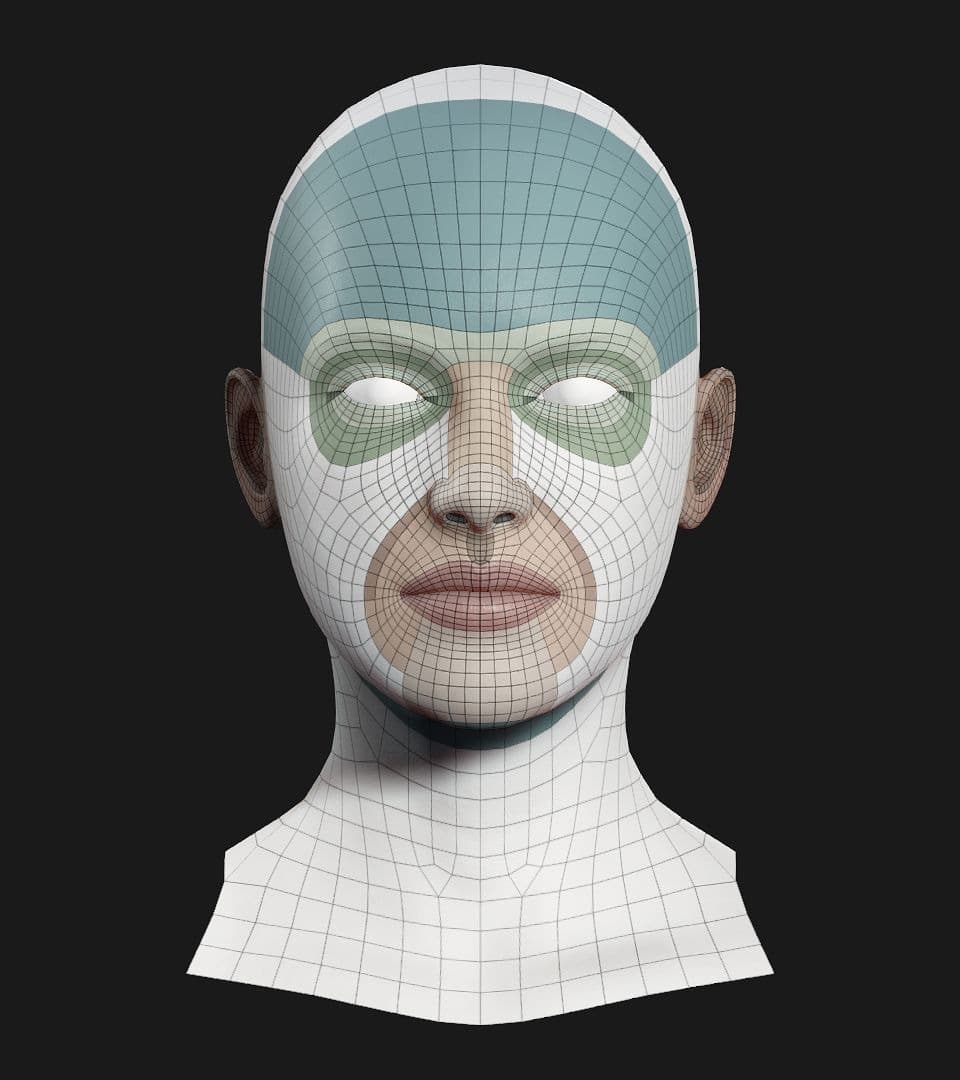
If the roads are smooth, the face moves smoothly. If the roads are messy, the expression starts to feel odd very quickly. Not scary. Just... slightly wrong in that tiny way the eye notices before the brain explains it.
02
The mouth is a busy crossing
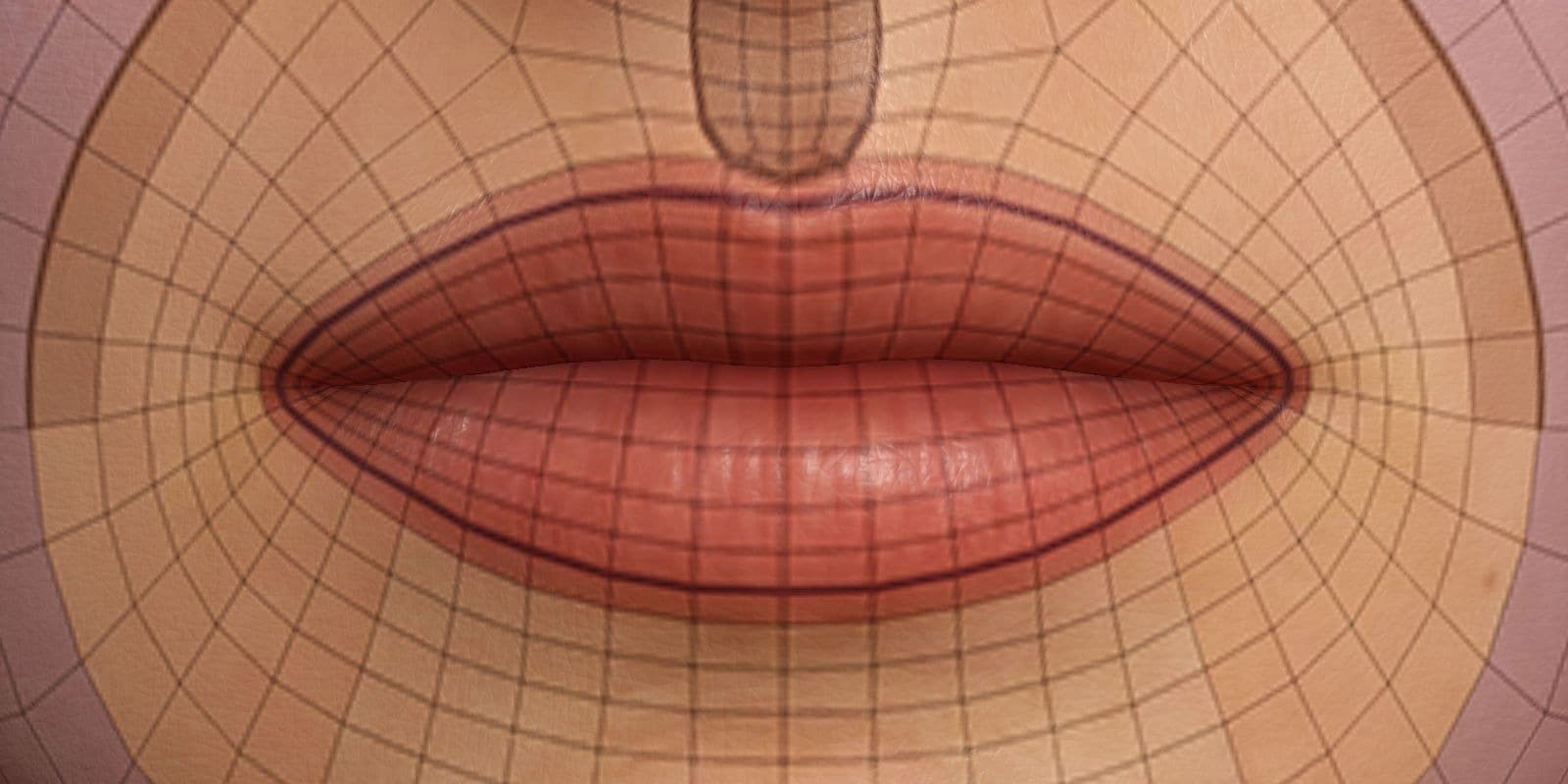
The mouth is where the map gets dramatic. It has to stretch, smile, purse, open, close, and still remember where the lips end.
The guide keeps returning to the lip edge and the mouth corners because this is where a face can lose its charm fast. A corner placed a little wrong can turn a soft smile into a stiff sticker.
 01
01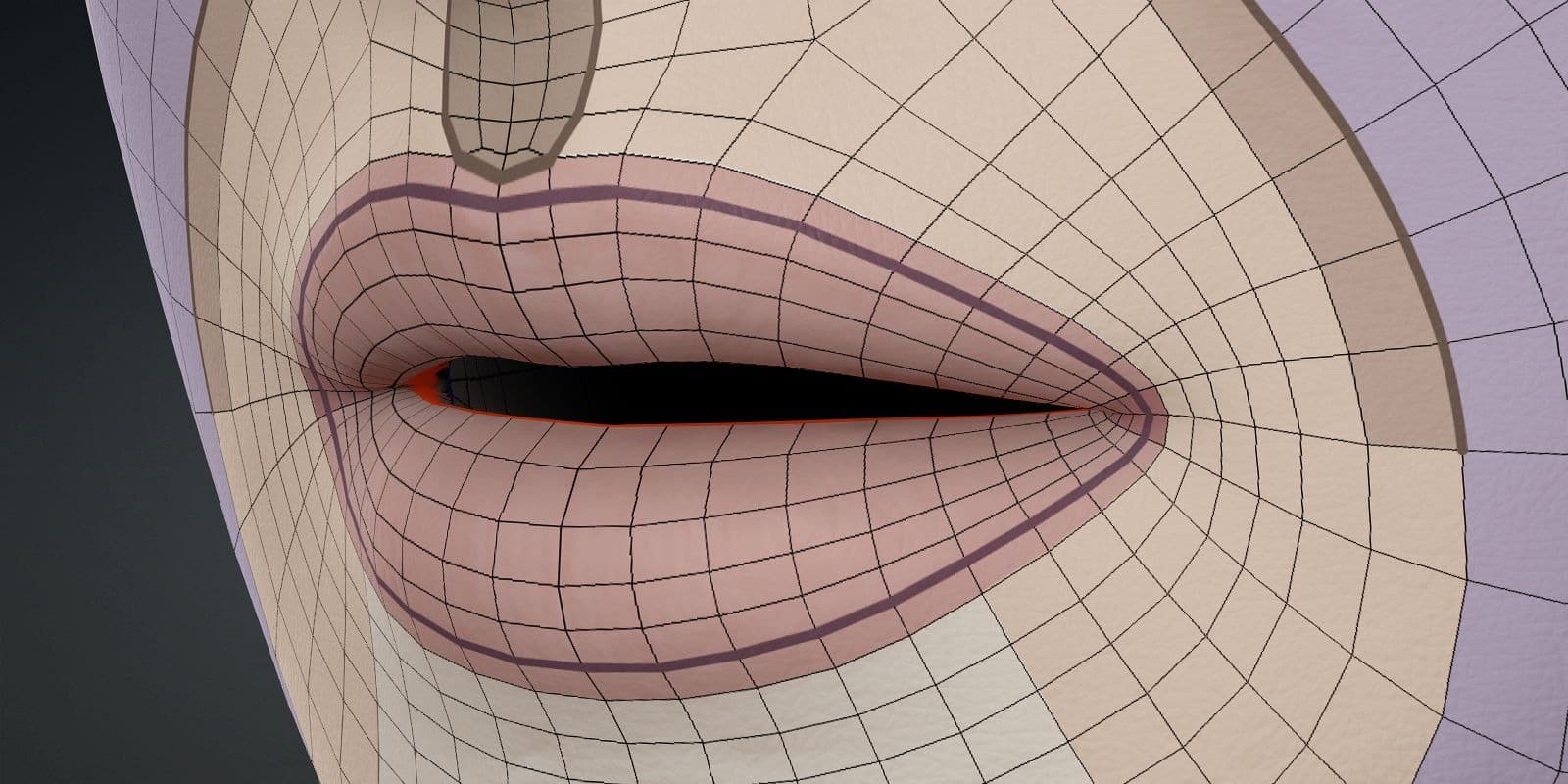 02
02That is the secret little joke in the file. The mouth looks like one simple feature, but underneath it is a traffic system.
03
Eyes need soft corners
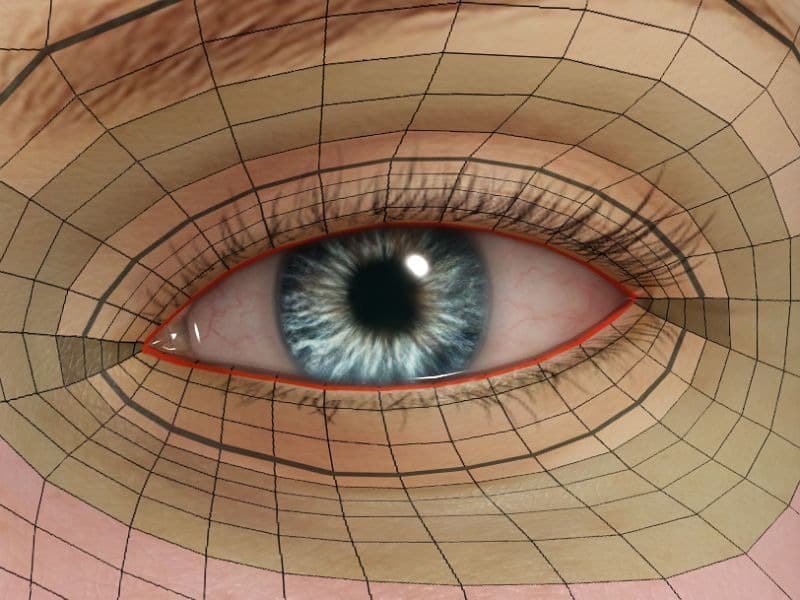
Eyes are even more delicate. A blink is small, but it asks a lot from the face. The eyelid has to slide over the eye. The lower area has to stay soft. The corner has to hold its shape.
The guide shows the eye socket, tear trough, and eyelid zones like quiet safety lanes. They help the face close, squint, and soften without pulling the texture into awkward shapes.
 01
01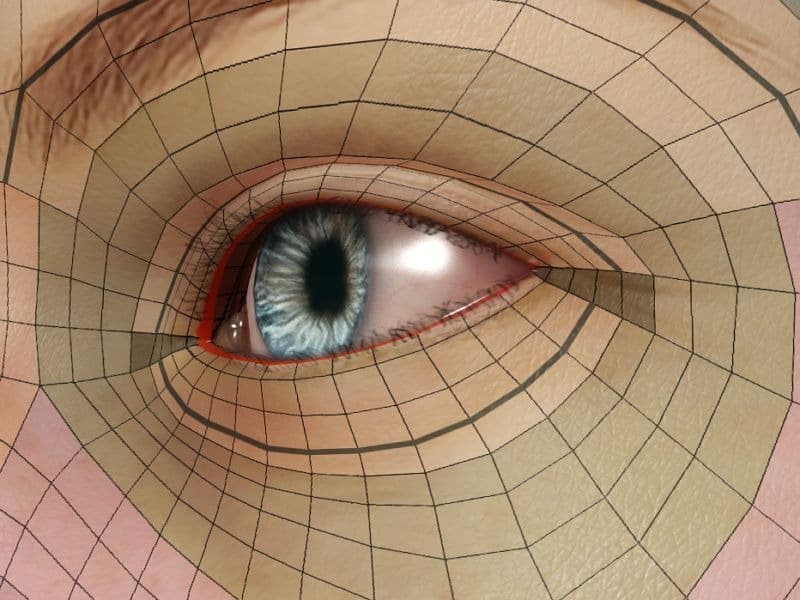 02
02This is why good digital faces often feel invisible. You do not notice the map when it works. You only notice it when the blink feels crunchy.
04
Wrinkles need room
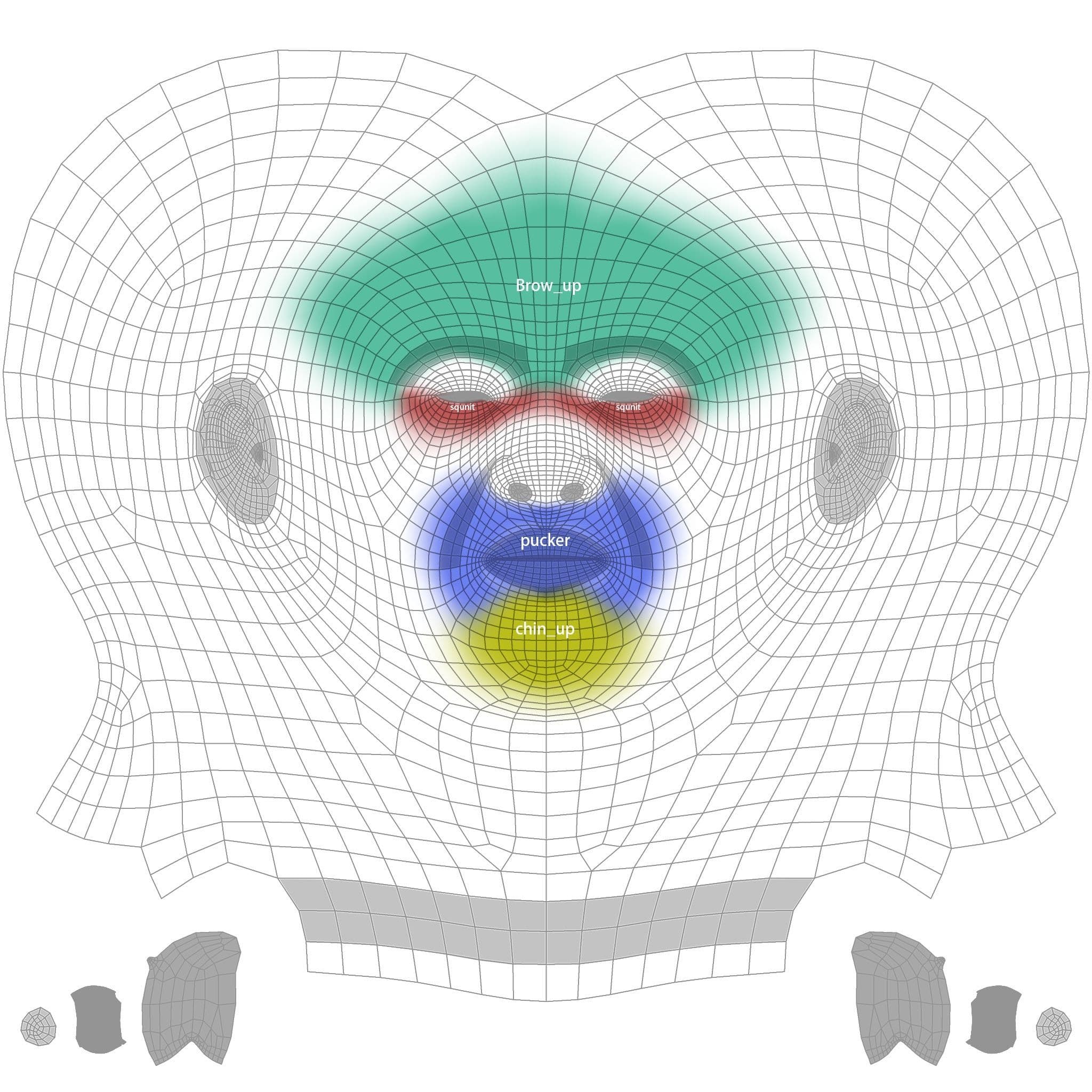
The sweetest part of the guide is the wrinkle map. It treats wrinkles like places the face already knows how to visit.
A forehead line, a smile fold, a jaw curve, a little under-eye dip: they are not random decorations. They are paths. The face needs room for them before it starts moving.
 01
01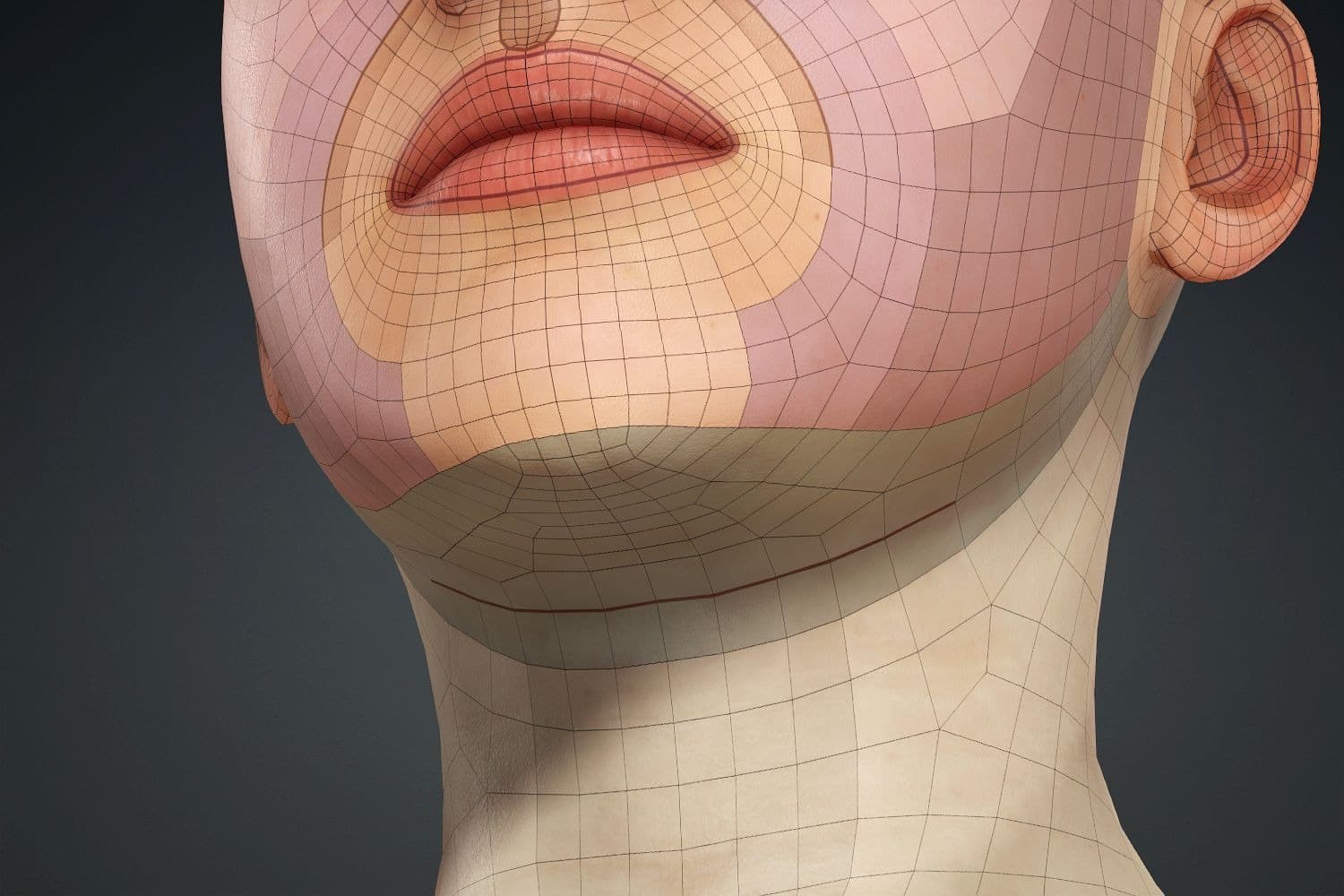 02
02So the guide is not only a technical map. It is a little choreography sheet. It says: give the face good roads, and later, when the character smiles, the whole city knows where to go.